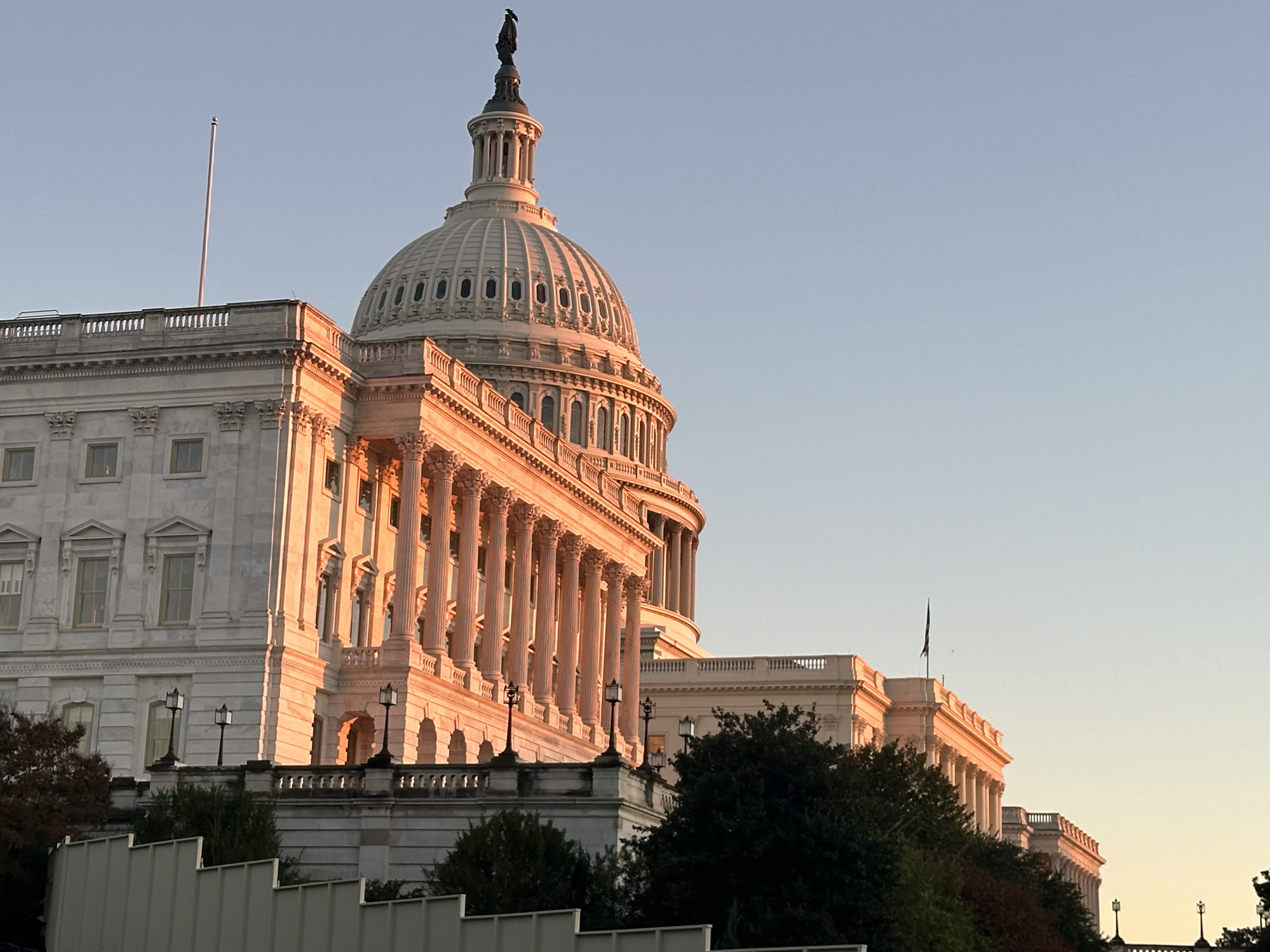
Thoughts and Prayers
Dear Congressman,
Please stop telling us how difficult it is to find the words.
There’s a parent who has to call the school and ask about a backpack,
who has to say their child’s name to someone who already knows,
then explain that there might be something in the front pocket
they would like to have back.
Ella Cook and MukhammadAziz Umurzokov were killed at Brown,
and Gary Palmer asked people to pray for those affected.
Congressman, how far does that word reach?
Does it reach the person who has to take the clothes out of the dryer,
who will find a sleeve turned inside out and put a hand through it
because there are still small things they can do for their child?
Does it reach the student sitting through another lecture
with one eye on the door, angry at themselves for looking?
We are affected. We are getting very good at continuing.
Avielle Richman was six. Daniel Barden was seven.
I want those ages to inconvenience you.
I want them to interrupt whatever explanation you have prepared
about why the thing we are asking for will have to wait.
A six-year-old should be able to get impatient with an adult
and grow old enough to be embarrassed by how they behaved.
There are parents who would give anything
to be spoken to badly by their children again.
You have a statement about the unimaginable.
They have an argument they cannot stop remembering,
something about getting dressed, something that did not matter,
and there will never be another morning to be more patient.
This is school. We should be allowed to hate it sometimes.
We should complain about the food and forget what we studied,
spend an entire lesson thinking about someone two desks over.
Alyssa Alhadeff should have had days she could barely remember.
Martin Duque Anguiano should have been able to waste an afternoon
without strangers aching over everything he might have done with it.
We are so tired of being told what we might become.
Let us be here long enough to disappoint somebody.
Let us change our minds about college, miss a deadline,
have a birthday that is awkward and badly planned
and followed by another birthday.
Nicholas Dworet should have had that time.
Jaime Guttenberg should have had that time.
There is nothing extravagant about what I am asking,
which makes the asking worse.
“I don’t like when we have a substitute because sometimes they ask us
what we’re supposed to do if the announcement comes on.
I know they’re new. I still wish they wouldn’t ask.”
There is a child in that sentence trying to be fair to an adult.
There is a child who already knows what happens to the lights
and which part of the room everyone is supposed to move toward.
Tell me how much more responsible you would like us to become
before you consider us old enough to be heard.
Scott Beigel and Aaron Feis worked at a school.
Christopher Hixon worked at a school.
There should be a limit to what this country expects
from the people who agree to spend their lives teaching us.
They have families waiting for them too.
They should get to leave work tired of us and come back Monday.
Instead, we learn what to do with our bodies when someone wants to kill us,
then return to the chapter we were on before the drill.
The teacher asks who remembers where we stopped.
Someone raises a hand. Someone always remembers.
There is something unbearable about how well we can do this.
“I keep my phone on even though we’re not supposed to.
My mom knows my schedule, but I worry she’ll call
and I won’t hear it. I worry about the other way around too.”
Luke Hoyer and Cara Loughran had people who knew their schedules.
Afterward, those people still had to live through the hour
when they would ordinarily expect them home.
I cannot stand that the clock keeps reaching it.
I cannot stand that a person can lose their child
and still have to get through four o’clock.
And while families learn what an afternoon can become,
the NRA Political Victory Fund reports $10,168,202.08
in independent expenditures for the 2024 election cycle.
There is enough money to argue over who should govern us,
enough to keep a position in circulation until we know it by heart.
The amount is recorded down to the eight cents.
Gina Montalto’s name deserves at least the care given to those decimals.
Joaquin Oliver’s life deserves more than the silence
between the announcement of another death and the next commercial.
How much does it cost to keep telling a country that nothing can be done?
How many times can the same argument be paid for
before the people hearing it begin to mistake repetition for truth?
The money funds support for some candidates and opposition to others.
It helps decide who will sit in the room when a proposal reaches a vote.
Then we are told to contact our representatives.
We are told to wait our turn at the microphone.
We are told our three minutes have expired
by people whose working hours we help pay for.
Alaina Petty will never get older than the photographs you have seen.
Meadow Pollack will never get to decide she hates an old photograph
and make her family take it down.
Even that small, ridiculous argument belongs to the living.
Even that has been taken.
Since 1946, federal law has required disclosure from certain people
paid to influence legislation. In 1995, the requirements grew stronger.
There have been decades to learn how the paperwork works,
how to state a client’s interests, how to report the money spent.
There are adults who make a living asking Congress for things.
Why do children have to survive a shooting to get an appointment?
Citizens United came in 2010. Restrictions on independent spending
by corporations and unions fell; the ban on direct corporate contributions
to federal candidates remained. The distinction has legal weight.
So does the word independent, so does the word expenditure,
and every word receives an explanation while we wait
for someone to explain what we are supposed to do with our fear.
I understand that a payment alone does not prove a purchased vote.
I am asking why so much money is spent trying to secure the people
who will cast it, and why the public is expected to be reassured
by a system it can barely afford to enter.
Helena Ramsay should not have needed anyone to make this argument.
Alex Schachter should not have needed his name read aloud
by people who never heard him say it himself.
Their families should have been able to keep ordinary things private
instead of deciding which memories to share with the news.
There is something obscene about the amount of suffering
a family must make public before people call them persuasive.
How many photographs would you like?
How much of the worst day of their lives must they describe
before you stop asking whether grief has made them unreasonable?
Carmen Schentrup and Peter Wang were killed at school.
That sentence should be difficult to get past.
It should make the rest of the meeting difficult.
Someone should have trouble returning to the agenda.
In a voluntary survey shared among Palm Beach County students,
more than two hundred people answered.
Eighty-eight percent of those respondents said they did not feel safe at school.
You can ask about the sample. You should understand what the number describes.
Then you have to answer the students who are already there,
waiting for you to finish discussing how they were counted.
“I don’t tell my dad when it happens because he’ll leave work.
Last time I waited until we were allowed out.
He got mad that I didn’t tell him, but I knew he would come.”
Think about having to protect your parent from how frightened you are.
Think about wanting them there and knowing they cannot get inside.
There are students doing this arithmetic under their desks
while adults argue over whether the fear has been exaggerated.
“I always look for my friend when we move into the corner.
She thinks I’m checking whether she’s scared.
I’m checking whether she’s there.”
At Apalachee, Cristina Irimie brought cake and pizza
to celebrate her birthday with her students.
She made room for them in something that belonged to her.
Richard Aspinwall was killed there too.
Christian Angulo and Mason Schermerhorn were fourteen.
Fourteen should leave you with so much you do not know yet.
You should be able to make a promise you will forget,
be certain about something you will laugh at years later.
There should be years later.
I am sick of having to explain what a child is owed
to people who can stand at a podium and say they love this country.
You love this country. Fine. Love us while we are still in it.
Love us when we interrupt your meeting and ask an impolite question.
Love us when we are angry enough to make you uncomfortable,
when we refuse the photograph because you have not answered us,
when we ask how you will vote and wait through the silence.
We have heard your prayers. We know the sentences by now.
We know where your voice will lower, where you will mention families,
where you will ask everyone to come together.
There are people who need those words, and I will not take them away.
But you have been elected to do things the rest of us cannot do
by closing our eyes and hoping hard enough.
You can put your name on a bill and defend it in public.
You can tell a donor that their money will not decide your position.
You can explain a vote without using the dead as the opening paragraph
of a speech that asks the living to accept more of the same.
And we can remember what you said when you wanted the office.
We can bring the proposal to the meeting and ask where you stand.
We can call back after your staff has passed along the message,
go door to door before the election, ask the next candidate
the question you have spent your term avoiding.
Some of us are too young to vote. We still live in your district.
Our parents still send us to school every morning
with an expectation so basic it humiliates me to write it:
they expect to see us again.
We will make you hear that expectation before another funeral.
We will ask while everyone we love is still answering their phone.
You will have to deal with us while we are loud and impatient,
while we can contradict you and tell you when you have misunderstood.
I want a parent to leave an argument unfinished
because there will be time to talk about it after school.
I want a teacher to bring enough cake for everyone
and complain afterward about the crumbs.
I want the things that happen next, the unremarkable hours
that never make anyone reach for a statement.
You say you are keeping us in your thoughts.
Tomorrow morning, we will put our bags on and go.
Before you ask our families to accept your condolences,
tell us what you are going to do today.